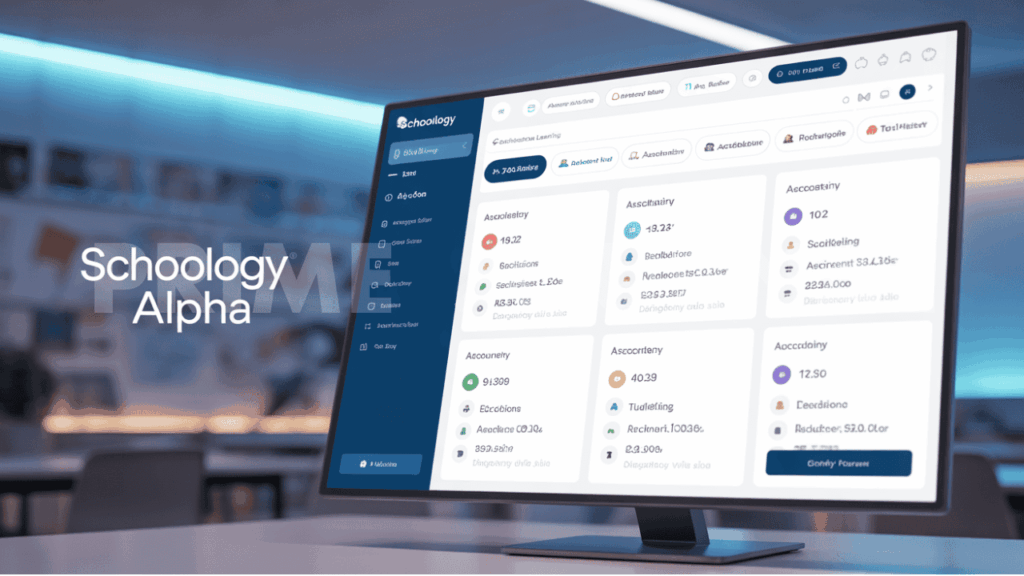

An Introduction to Schoology Alfa
Schoology Alfa represents a significant advancement in the realm of educational technology, designed to facilitate blended learning in both traditional and innovative formats. Blend learning, in essence, supports a combination of in-person instruction with online digital content, providing a flexible and adaptive learning environment. This platform is increasingly pivotal for contemporary education, catering to the diverse needs of students, teachers, and parents alike.
At its core, Schoology Alfa integrates various educational tools and resources, promoting engagement and collaboration among its users. The platform offers features such as course management, automated assessment tools, and interactive learning materials. Such functions enhance a teacher’s ability to deliver content effectively while enabling students to access learning modules at their convenience. This accessibility is particularly crucial in today’s academic setting, where remote and hybrid learning environments have gained prominence due to sudden shifts in pedagogical approaches.
Another distinguishing feature of Schoology Alfa is its user-friendly interface, designed to facilitate seamless navigation for all users. Educators can easily create and manage assignments, while students can monitor their progress and interact with peers, thus fostering a sense of community and shared responsibility in the learning process. Additionally, the involvement of parents through monitoring tools provided by Schoology Alfa allows a broader engagement with student learning, which can lead to improved student outcomes.
As educational institutions increasingly adopt digital tools to enhance their curriculum, the importance of platforms like Schoology Alfa grows. By embracing this technology, educational establishments can not only deliver quality education but also prepare students for the demands of a rapidly evolving digital world.
Key Features and Benefits of Schoology Alfa
Schoology Alfa offers a comprehensive suite of features designed to enhance the educational experience for both teachers and students. One of its hallmark functionalities is assignment management, which allows educators to create, distribute, and manage assignments in a user-friendly interface. This not only streamlines the process for teachers but also provides students with clear guidance on what is expected of them, ultimately leading to improved academic performance.
Effective communication tools are another critical component of Schoology Alfa. The platform incorporates messaging systems that facilitate dialogue between teachers, students, and parents. This promotes active engagement, better feedback mechanisms, and fosters a sense of community among users. By ensuring that everyone involved in the educational process can communicate seamlessly, Schoology Alfa enhances collaboration, which is essential for student success.
Another vital feature is the grade tracking system, which empowers educators to monitor student performance closely. This element allows for timely interventions and support tailored to individual needs. Transparent grade reporting contributes to a more personalized learning experience, giving students insight into their progress and encouraging them to take ownership of their learning.
Additionally, the user-friendly interface of Schoology Alfa makes it accessible for users of all levels, further eliminating barriers to technology integration in education. It is designed to be intuitive, meaning that both teachers and students can navigate the platform with ease, reducing the learning curve that often accompanies new educational technologies.
In conclusion, the blend of assignment management, communication tools, grade tracking, and an accessible interface positions Schoology Alfa as a compelling choice for educational institutions, ultimately fostering enhanced collaboration and personalized learning experiences.
Integrating Schoology Alfa into Educational Settings
The effective integration of Schoology Alfa into educational settings requires a well-structured approach that aligns with the specific needs of the institution. The first step is to provide comprehensive training for educators to ensure they are comfortable and proficient in utilizing the platform. This can include workshops, online tutorials, and ongoing support sessions. By equipping teachers with the necessary skills, schools can enhance their capability to utilize Schoology Alfa effectively in their instructional practices.
Engaging parents and students is also an essential part of the integration process. Schools can host informational meetings or create webinars to demonstrate the features and benefits of Schoology Alfa. By doing so, families can understand how to navigate the platform, access resources, and communicate with educators more effectively. Providing guides or resources for parents can further promote their involvement and support for their children’s learning experiences.
To facilitate a smooth transition to Schoology Alfa, institutions should consider a phased implementation approach. This could mean starting with a pilot program in a few classes or grades before expanding it to the entire school. This method allows for gathering feedback and making necessary adjustments before full-scale implementation. Additionally, case studies from institutions that have successfully adopted Schoology Alfa can serve as valuable resources. For instance, schools that strategically integrated the platform into their curriculum reported enhanced student engagement and improved academic performance.
Finally, to ensure sustainability, regular assessments and feedback mechanisms should be established. Monitoring the usage patterns and outcomes can help educators refine their teaching strategies while also identifying areas where further training might be needed. Taking these steps will help in embedding Schoology Alfa into the educational landscape, thus.unlocking its full potential for modern learning environments.
The Future of Learning with Schoology Alfa
As we look towards the future of education, Schoology Alfa stands poised to play a crucial role in transforming the learning landscape. With ongoing technological advancements, the platform is expected to integrate seamlessly with an array of digital learning tools and resources, enhancing the educational experience for both teachers and students. These integrations may include advanced analytics, artificial intelligence, and personalized learning pathways that adapt to student performance, thereby improving outcomes.
Moreover, the continuing rise of remote and hybrid learning environments, amplified by global events, highlights the necessity for robust and flexible educational platforms. Schoology Alfa is uniquely equipped to cater to these needs, offering a comprehensive suite of features designed for varied learning modalities. The platform’s ability to facilitate communication and collaboration among peers and educators ensures that learning does not stop, irrespective of geographical limitations.
User feedback and community insights will be instrumental in shaping the evolution of Schoology Alfa. The developers are attentive to suggestions from educators and students alike, which may lead to new features or enhancements aimed at improving user experience. Whether it’s streamlining administrative processes or offering more personalized support, the responsiveness to community feedback is likely to result in a continually refined platform.
In conclusion, the trajectory of Schoology Alfa in the educational sector is promising. With its capacity for integration, adaptability to modern learning needs, and commitment to user-centered development, Schoology Alfa is not just a tool for the present; it is a gateway to the future of learning, helping to cultivate an educational environment conducive to growth and innovation.